PNG%20copy%202%20(little%20touch%202).png)
Rust, Rumors & Bullet Holes: The Mysterious History of a 1948 Packard Super Eight
- Tadas Svetikas

- Oct 13, 2025
- 2 min read

There’s something irresistible about old cars that look like they have a story to tell. Faded paint, cracked glass, and a heavy coat of dust can give any vehicle a haunted elegance. But when you find one peppered with bullet holes, the story starts to feel more like a crime novel.




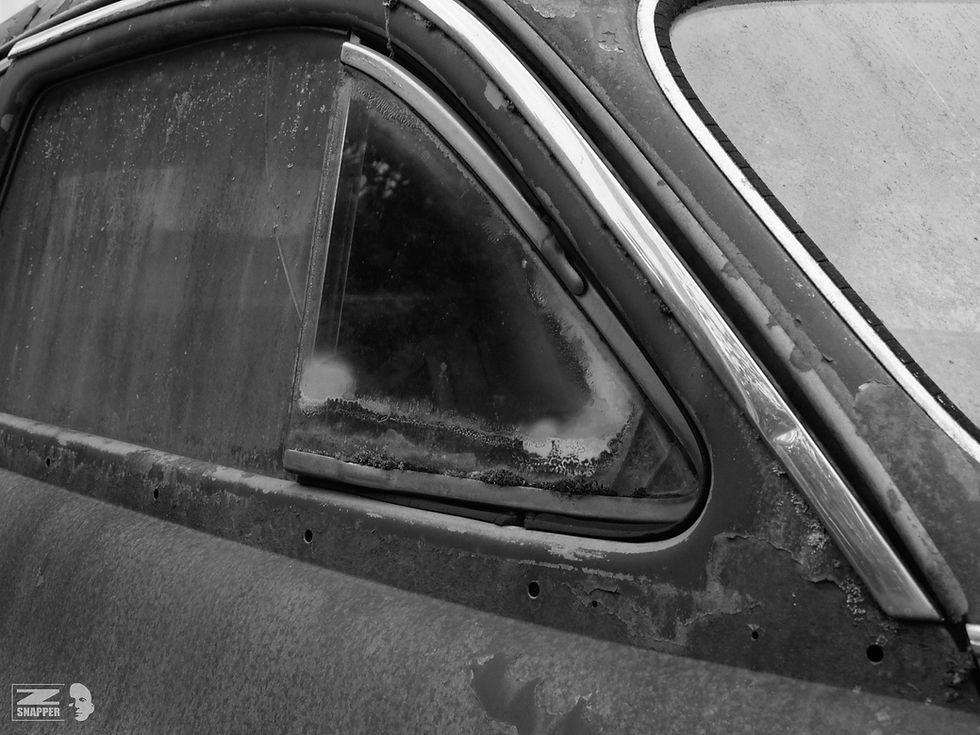
Recently, a weathered 1948 Packard Super Eight with bullet holes surfaced. The big question: was this car involved in criminal activity, or is it just a relic with a dramatic patina?
Identifying the Car
This Packard is a 1948 Super Eight Club Sedan, a fastback design with signature postwar styling. A few features make the year and model stand out:
A distinctive “shovel-nose” grille with closely spaced horizontal bars.
Wraparound windshield with a center split.
Tall vertical bumper guards typical of the 1948–1949 production run.
A sweeping fastback roofline, which Packard phased out by 1950.
These details firmly place the car at the dawn of postwar American luxury — when Packard still rivaled Cadillac in prestige.

Packards and Organized Crime
In the late 1940s, Packards weren’t just symbols of status. They were favored by gangsters and bootleggers for a few practical reasons:
Power & quiet: Their straight-eight engines were fast and smooth, perfect for a silent getaway.
Luxury & discretion: Unlike flashy Cadillacs, Packards didn’t draw as much attention.
Large trunks: Sadly, this made them infamous in a handful of violent criminal cases.
Police archives from cities like Chicago, Detroit, and New York occasionally mention Packards recovered after shootouts or used as getaway cars. A Packard parked on a dark street in 1949 wasn’t just another sedan — it could have been carrying anything from whiskey to stolen cash.


Bullet Holes: Clue or Coincidence?
While it’s romantic (or chilling) to imagine a mob shootout, bullet holes alone don’t prove anything. Many abandoned classic cars were shot at for sport, used as farmyard targets, or vandalized decades after their prime.
To find out if this particular car was involved in anything sinister, the answer likely lies in its Vehicle Identification Number (VIN). Packard VIN plates were usually mounted on the driver’s side door jamb or firewall. With that number, one could trace old registration or possibly police records to uncover a real history.
A Mystery Waiting to Be Solved
Whether this Packard was part of a crime spree or just a victim of rural target practice, it embodies a unique slice of American automotive history. It’s not just a rusting relic — it’s a time capsule from an era of speed, style, and shadowy stories.
The bullet holes are silent. The car doesn’t talk. But if you look closely, and dig into the archives, it might just whisper its secrets.




Comments