PNG%20copy%202%20(little%20touch%202).png)
Johanneskirche at Feuersee – A Landmark in Stuttgart-West
- Tadas Svetikas

- Oct 1, 2025
- 2 min read

Construction and Architecture
Built between 1865 and 1876, designed by Württemberg’s chief architect Christian Friedrich von Leins.
Style: Neo-Gothic, inspired by major European cathedrals.
Location: on an artificial peninsula in the Feuersee (“Fire Lake”), originally a water reservoir for firefighting.
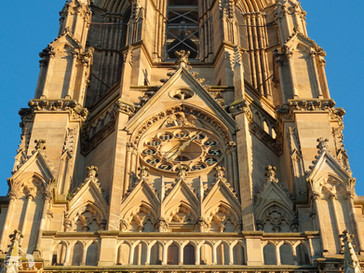
Features: cruciform ground plan, pointed arches, ornate stone tracery, and a multi-part choir.
War Damage and Reconstruction
During World War II, the church suffered heavy damage – its spire and vaulting were destroyed.
Reconstruction (1948–1966) left the tower without its spire, replaced by a viewing platform with a balustrade. The nave’s vaulting was not rebuilt.
These visible scars are preserved intentionally as a memorial to peace, forming part of the church’s identity today.



The Protestant Parish Stuttgart-West
Formation and Members
The parish was created in 2019, merging the former congregations of Paulus, Paul-Gerhardt, and Johannes.
It serves around 8,000 members.
Stuttgart-West is one of the city’s most vibrant neighborhoods: densely built Gründerzeit houses, a lively urban lifestyle, cafés, and plenty of green spaces.
Services, Music, and Programs
Main Sunday Service: 9:45 AM at Johanneskirche.
Children’s Church: 11:15 AM (outside school holidays).
After-Work Service: Thursdays, 5:00–5:30 PM.
Other parish centers:
Pauluskirche: family focus, strong musical life (choirs, orchestra, brass ensemble).
Paul-Gerhardt-Kirche: meditation, spirituality, programs for seniors.
Music is central: organ concerts, choir performances, and orchestral events are held regularly at Johanneskirche and the other churches.
A Public and Cultural Space
Johanneskirche is one of Stuttgart’s most photographed landmarks and a tourist attraction.
The church is open daily, inviting both worshippers and visitors.
Surrounded by the Feuersee with its promenade, benches, and cafés, the setting blends city life, nature, and architecture in a unique way.


Significance and Identity
Johanneskirche was the first church built in Stuttgart after the Reformation.
It is a listed historic monument and a prime example of neo-Gothic architecture in Stuttgart.
The missing spire and vault are a conscious reminder of war destruction – preserved as a visible memorial for peace.


Comments